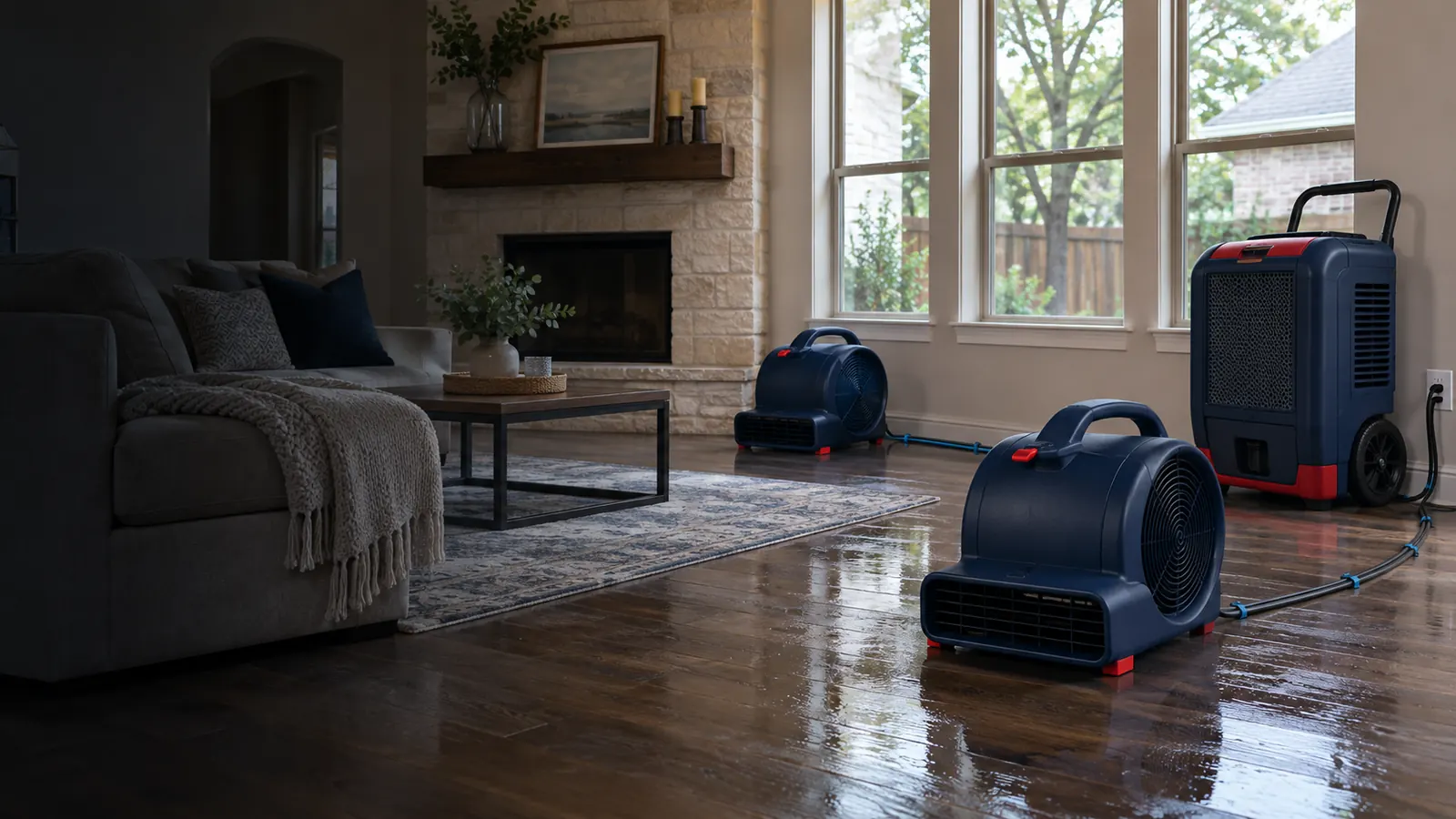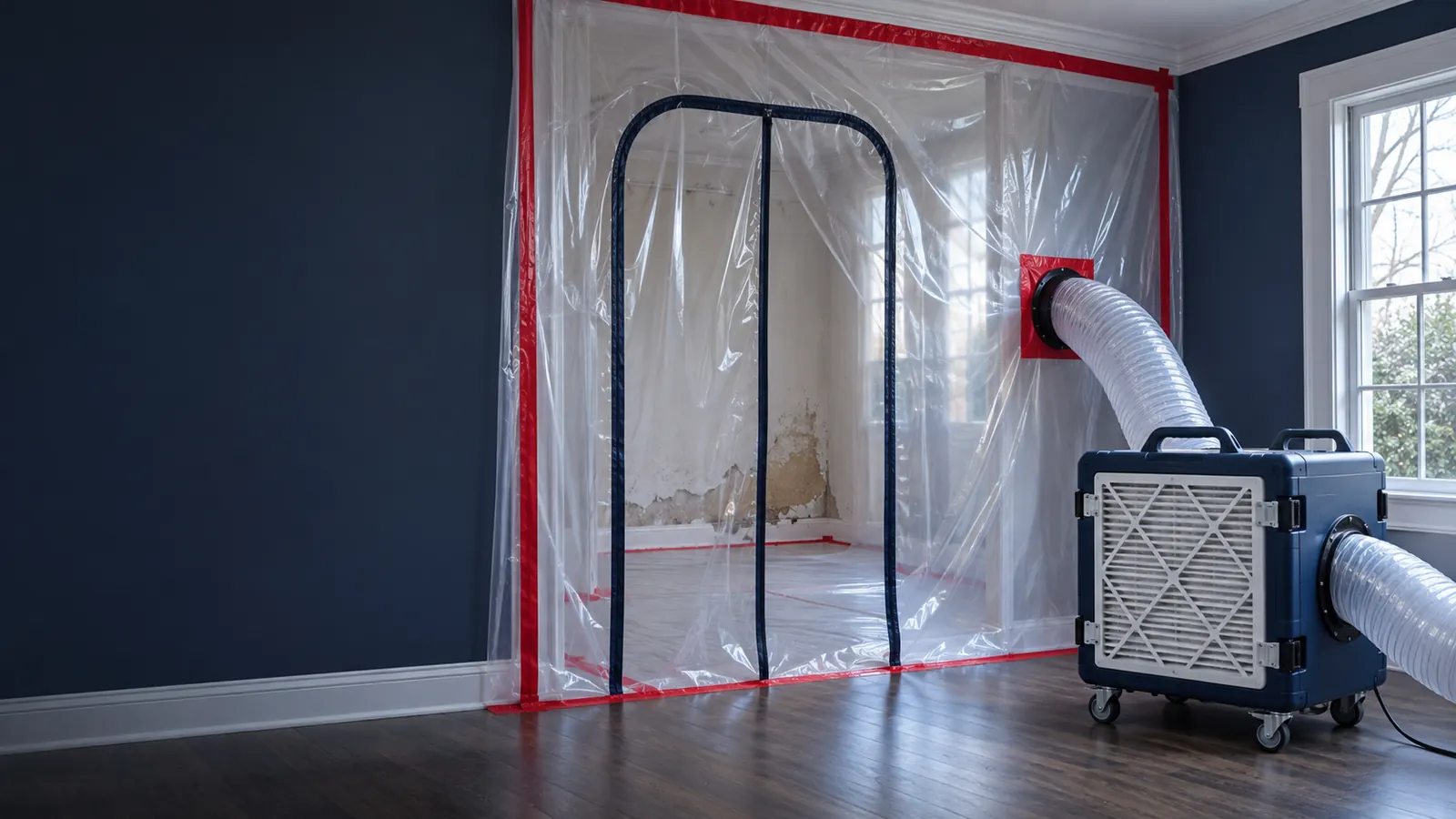
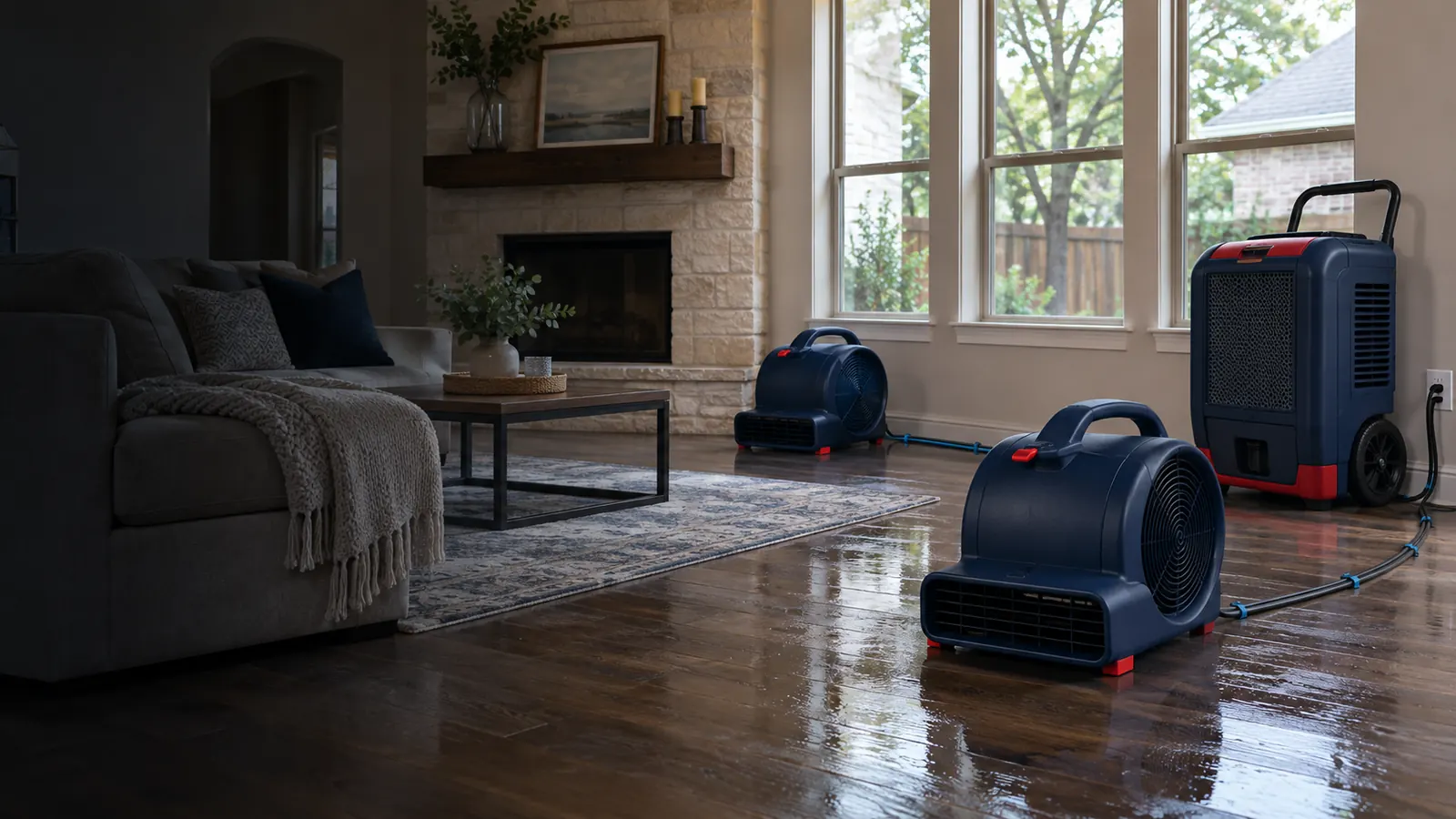
There is no reliable fixed drying time for every house. The water source, materials, depth of wetting, indoor conditions and access all matter. A useful drying plan explains what will be measured and what conditions must be met before equipment is removed or walls are closed.
Separate the stages on your timeline
Stopping a leak, extracting water, drying structural materials and rebuilding are separate stages. A plumbing repair may be finished while a wet subfloor still needs attention. Conversely, a room may be dry enough for repairs while replacement materials or contractor scheduling extend the overall recovery.
Ask which stage an estimate refers to. A statement about equipment rental days should not be mistaken for a guarantee that your entire house will be restored by the same date. Keep repair and drying timelines together so a handoff does not leave an untreated area.
Ask what is wet and how it will be accessed
Drywall paper, insulation, wood framing, carpet pad and layered flooring react differently to water. Finishes may prevent access to the damp material below. Moisture evaluation should consider adjoining spaces and concealed areas suggested by the water path.
Ask whether access openings, furniture movement or material removal are included in the scope. Do not open walls yourself when wiring, contaminated materials or older finishes could create additional hazards. The IICRC identifies inspection, material science and drying technology as parts of professional water restoration.
Reference: IICRC: Standard for Professional Water Damage Restoration
Look for evidence of progress
A useful daily record identifies the room or assembly checked, the reading location and whether the condition is improving. Ask how the provider chooses comparison areas or drying goals. A single reading without its location, instrument or context is harder to interpret than a consistent series.
You can help by leaving equipment settings alone unless a safety concern arises and by reporting a new leak or unusual smell. If noise or heat makes a room difficult to use, ask about the plan rather than disconnecting equipment without discussing the effect.
Understand why the plan might change
A newly discovered wet cavity, continued rain intrusion or damaged flooring can change the original scope. Contamination may require cleaning or removal rather than drying alone. Ask what changed, why it matters and how the updated recommendation will be documented.
The endpoint should be based on assessed material conditions, not simply on a comfortable room or the absence of puddles. Before reconstruction, ask for the completion record and confirmation that the original source has been corrected. Keeping those records is useful if a stain or odor returns.
Reference: EPA: Flooded Homes Cleanup Guidance
What happens after water damage drying is complete?
Ask for a completion record identifying the assessed areas, the basis for completion and any unresolved or inaccessible locations. Confirm that the original source repair is documented separately. Equipment removal does not automatically clear every material for reuse, establish structural safety or show that electrical and HVAC components affected by the loss are ready for service.
Next, compare the retained and removed materials with the reconstruction scope. The insulation replacement guide explains why the wet room’s drying record and the insulation decision answer different questions. Identify who is responsible for remaining contamination, framing, roof, plumbing or equipment work before cavities are closed.
Agree on the reconstruction and insulation handoff
Give the next contractor the source-repair findings, drying record, removal boundaries and photographs of opened areas. Ask what additional checks its product or work requires. Confirm any local permits, inspections and product-specific installation conditions before scheduling finish work. The goal is a documented transfer of responsibility rather than an assumption that every later task was included in drying.
For roof-related losses, the wet attic insulation guide helps coordinate roof, ceiling and insulation decisions. Keep a written list of outstanding work and report recurrence to the relevant provider. A fresh finish or insulation layer should not be used to cover an unanswered moisture question.
Your homeowner checklist
- Clarify extraction, drying and rebuilding as separate stages.
- Ask which rooms and assemblies are being monitored.
- Request progress records and the basis for completion.
- Report new water entry before changing equipment settings.
Questions homeowners ask
Does the 24–48 hour mold-prevention advice mean my house must be fully dry then?
No. That guidance emphasizes prompt moisture control. It does not establish a universal completion deadline for every wet wall, floor or concealed assembly.
Can I tell when hardwood is dry by touching it?
Surface feel is not a reliable check of moisture within or below flooring. Ask what assessment supports retaining the floor and when it can be covered or repaired.
General homeowner information, informed by the linked public guidance. On-site conditions, local authorities and the appropriate qualified professionals determine what is safe for your property.
More water damage resources