Water categories describe contamination, not the size of a puddle or the amount of demolition. Broadly, Category 1 begins with a sanitary source, Category 2 involves significant contamination, and Category 3 involves gross contamination. A trained assessment must consider the source and what the water contacted before choosing a cleanup plan.
Keep categories separate from the amount of water
A small sewage backup can call for different controls than a larger clean supply-line leak. The category addresses contamination; the extent of wetting and material response are separate questions. Clear water is not proof that a room is safe to enter or that a floor can simply be dried.
Give the assessor an accurate history: source, discovery time, materials affected, prior leaks and any known contamination. Do not label an event yourself based on a photograph or a contractor estimate template. The initial description helps the assessment but does not replace it.
Reference: IICRC: Standard for Professional Water Damage Restoration
Understand the three broad distinctions
Category 1 is associated with a sanitary source at the point of origin. Category 2 indicates contamination that can create a health concern. Category 3 is grossly contaminated water; sewage and contaminated rising water are important examples. These are practical distinctions for discussing a scope, not a homeowner testing method.
A supply-line leak can encounter contaminants after leaving the pipe. Similarly, water from a weather event must be assessed rather than assigned a category solely because rain was involved. The IICRC has specifically clarified that top-down rain intrusion is not automatically Category 3.
Reference: IICRC S500 Consensus Body: Water Categories and Weather Events
Ask how classification changes the work
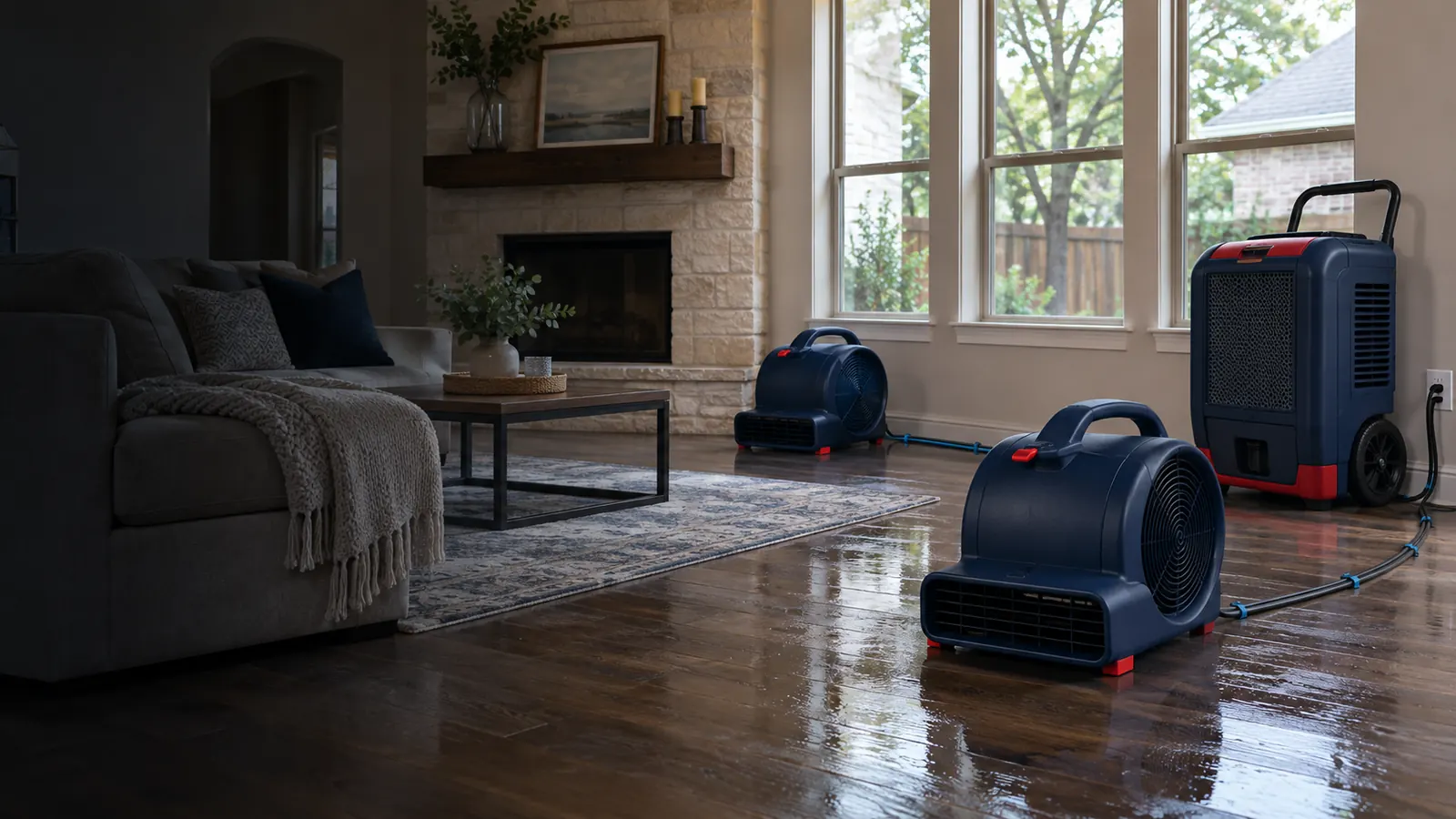
Ask what findings support the category and whether the plan requires containment, cleaning, removal or specialist assessment. Do not assume that running household fans is an adequate response to contaminated water. Keep occupants away from suspected sewage or flood contamination while the situation is assessed.
A written scope should connect findings to recommendations. If the category changes after inspection, ask what new information led to the change and which tasks are affected. This helps you compare estimates without treating the lowest equipment count as the safest plan.
Reference: CDC: Floodwater Safety
Do not use a clock as the only classification test
Time and conditions can affect contamination, but an internet rule that all water changes category after a fixed number of hours is not a complete assessment. Temperature, source, contact materials and the history of the space all matter.
Record what you actually know and say when a detail is uncertain. Ask the provider to explain the basis for its determination and the limitations of the inspection. If health risks or unusual contaminants are suspected, ask whether an appropriate specialist should evaluate them.
Reference: IICRC S500 Consensus Body: Water Categories and Weather Events
Your homeowner checklist
- Describe the original source and any surfaces contacted.
- Keep people away from suspected contamination.
- Ask which findings support the category determination.
- Compare cleanup scopes rather than category labels alone.
Questions homeowners ask
Is clear water safe water?
Not necessarily. Appearance does not establish the source, contamination or electrical safety of a wet room.
Are water category and damage class the same?
No. Category concerns contamination. Other classifications address the extent or characteristics of wetting; ask the assessor to explain each term in your scope.
General homeowner information, informed by the linked public guidance. On-site conditions, local authorities and the appropriate qualified professionals determine what is safe for your property.
More water damage resources