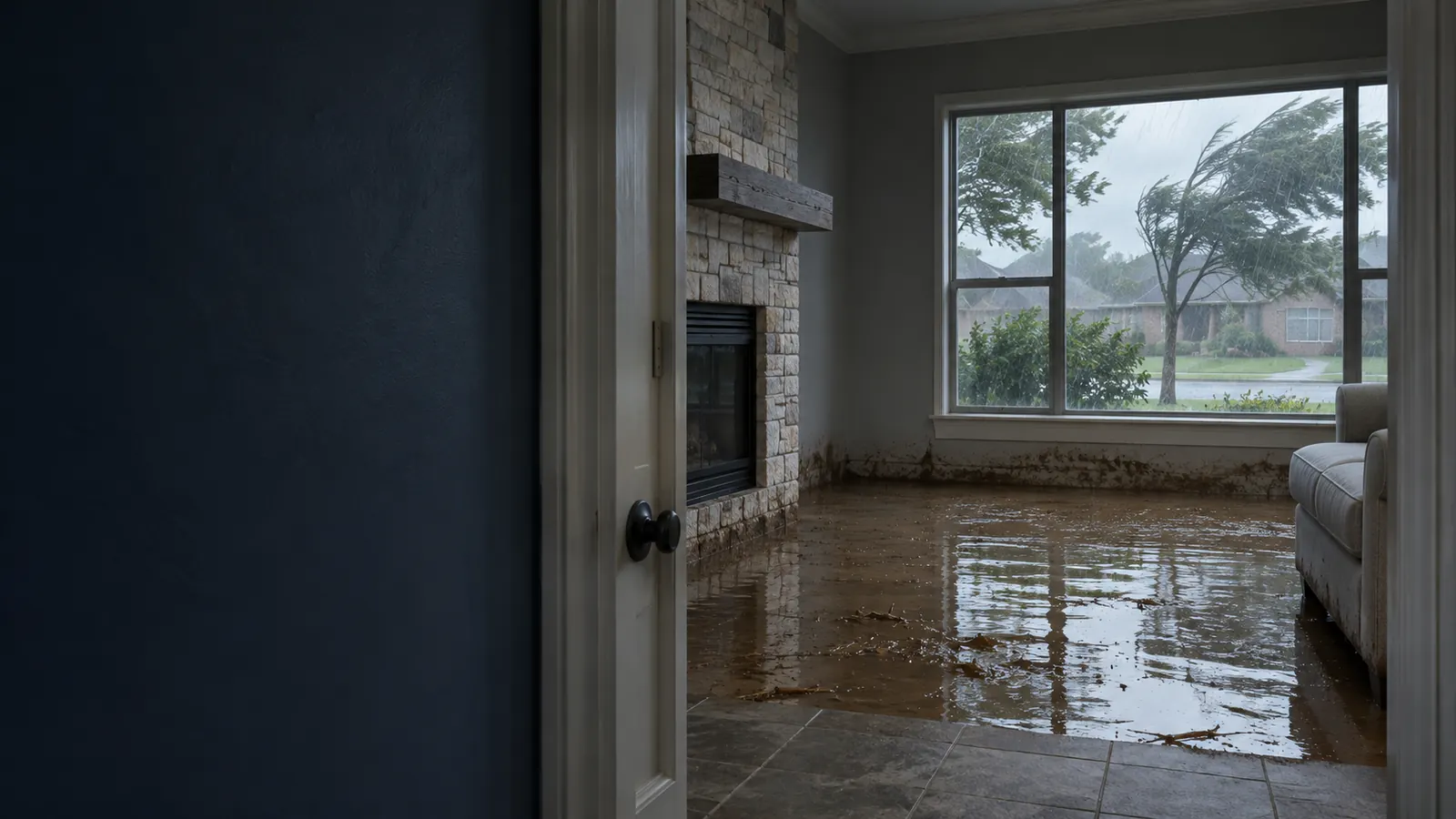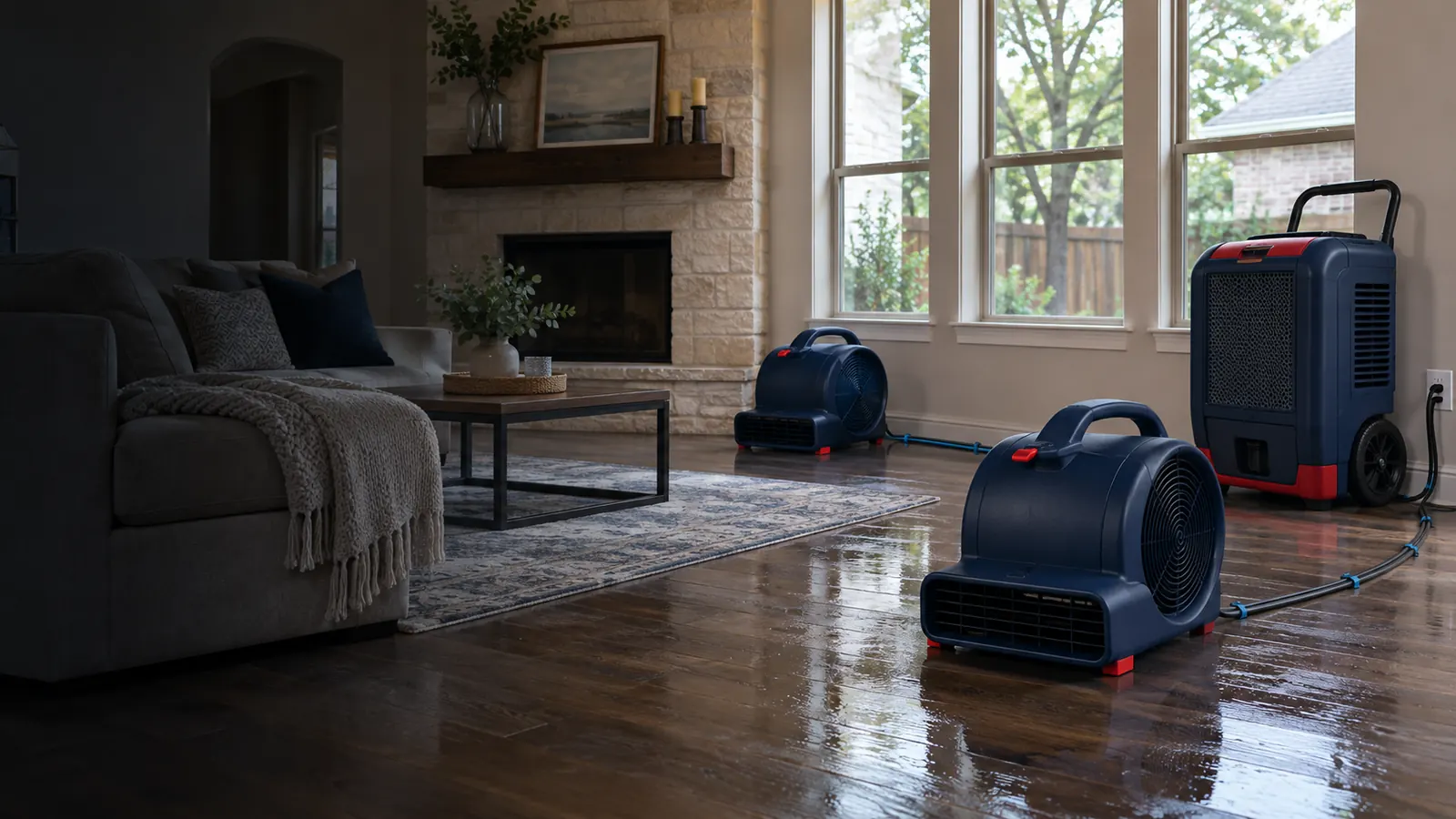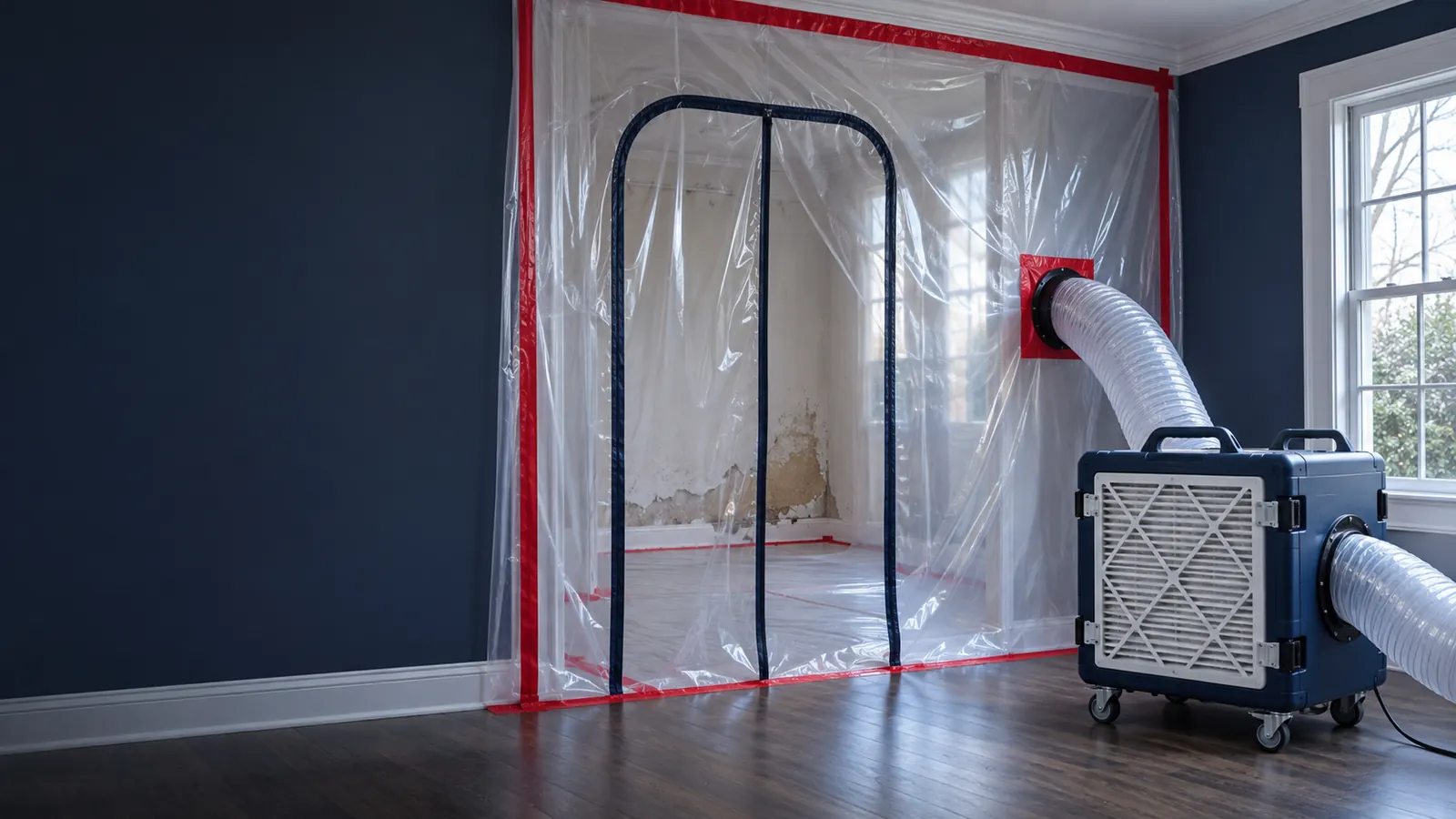
Water-damaged insulation often needs replacement, especially when absorbent materials are soaked, contaminated or no longer fit correctly. The decision depends on the material and the loss, not just whether its surface feels dry. Correct the moisture source, assess the affected assembly and resolve removal or remediation questions before planning replacement.
Start with the water loss, not the replacement product
Ask which rooms and building cavities were affected, how water reached them and whether the source is controlled. A supply leak, outside floodwater and recurring condensation do not describe the same exposure. Tell the assessor about odors, earlier leaks and any areas concealed by finishes. Appearance alone cannot establish contamination or tell you what is happening behind insulation.
Our water damage restoration service addresses the affected building and its drying needs. An insulation estimate answers a later question about the replacement assembly. Neither should be assumed to include plumbing repair, roofing, hazardous-material work or structural evaluation unless those services are explicitly in the written scope.
Identify what the insulation actually is
EPA’s water-damage cleanup table lists cellulose and fiberglass insulation for discard and replacement, even in its clean-water response guidance. A prompt response is valuable, but the familiar 24–48-hour advice is not a promise that wet insulation can be kept. Contamination or other damage can require a different, more restrictive cleanup plan.
Mississippi State University Extension also describes removal of waterlogged batt, rock wool and fiberglass to permit wet wall assemblies to dry. Rigid boards and existing spray foam need their own assessment of facers, attachment, contamination and the materials behind them. Resistance to absorbing water does not demonstrate that concealed framing is dry or that the whole assembly is serviceable.
Reference: EPA: Water Damage Cleanup and Mold Prevention, Table 1 · Mississippi State University Extension: Flood-Damaged Walls and Insulation
Understand why removal may be part of restoration
Insulation may need to come out because it is damaged, because it conceals affected framing or because it limits access for assessment and drying. Ask the provider to identify which reason applies to each area. A selective removal scope should explain its boundaries; a complete removal recommendation should explain why the loss or planned work requires that extent.
Do not handle unknown insulation to identify it. Suspected vermiculite should remain undisturbed pending the appropriate professional assessment, consistent with EPA guidance. Where mold or other contamination is suspected, arrange the relevant evaluation before ordinary removal begins. Our mold remediation information explains why the moisture source and cleanup scope need attention together.
Reference: EPA: Asbestos-Contaminated Vermiculite Insulation
Ask what supports retaining a material
If a provider recommends keeping any affected insulation, ask for the basis: product identification, exposure history, condition, accessible assessment findings and manufacturer guidance. The answer should also address adjoining wood, drywall and other layers. A photograph showing no puddle is not a completion record for a concealed cavity.
Check whether the remaining material still occupies the intended space without displacement, gaps or compression. Installation quality matters independently of moisture. Building America describes how voids and poor contact compromise the intended insulation coverage. Avoid assuming that adding another layer over damaged material restores the original assembly or addresses an unresolved water route.
Reference: Building America: Insulation Installation Quality
Arrange the insulation scope after restoration findings
Before replacement, bring the source-repair findings, removal boundaries and moisture-completion record to the insulation discussion. Ask what the installer needs to verify at the substrate and which areas will remain accessible. Identify any separate remediation, electrical or framing work that must be completed before materials conceal the cavity.
TX Foam Pros describes insulation removal and replacement planning for this later stage. Confirm what its proposal includes and excludes for your property; an insulation service page does not establish that contamination cleanup is included. Compare appropriate material options rather than treating a water loss as an automatic reason to convert the house to spray foam.
Confirm the replacement assembly and completion documents
Ask where the thermal and air boundaries will be, how penetrations and adjoining insulation connect, and what product instructions apply. Have the contractor identify applicable local building and energy requirements, necessary permits or inspections, and any required protection or clearances. A generic material name is not enough to demonstrate compliance for the installed assembly.
Keep photographs before cavities are closed, product details, installation records and any inspection results with the water-loss documentation. If moisture returns, use that record to identify the responsible next step. Do not accept covering the affected area as evidence that the original source or drying question has been resolved.
Your homeowner checklist
- Record the source and exposure before selecting replacement insulation.
- Ask which material and surrounding layers were assessed.
- Get the reason and boundaries for removal or retention in writing.
- Resolve contamination, suspect materials and access hazards before disturbance.
- Keep restoration and insulation completion records together.
Questions homeowners ask
Can insulation be kept if it dries to the touch?
Surface feel does not establish condition throughout an insulation layer or behind it. Ask for a material-specific decision addressing exposure, contamination, physical condition and the adjacent assembly.
Does every water loss require new spray foam?
No. Replacement choices should suit the assembly and applicable requirements. Spray foam is one possible insulation system, not the default remedy for every water-damaged home.
Can an insulation company finish the cleanup too?
Confirm the actual scope and qualifications. Moisture assessment, contamination remediation, removal and replacement may involve separate providers and completion requirements.
General homeowner information, informed by the linked public guidance. On-site conditions, local authorities and the appropriate qualified professionals determine what is safe for your property.
More water damage resources