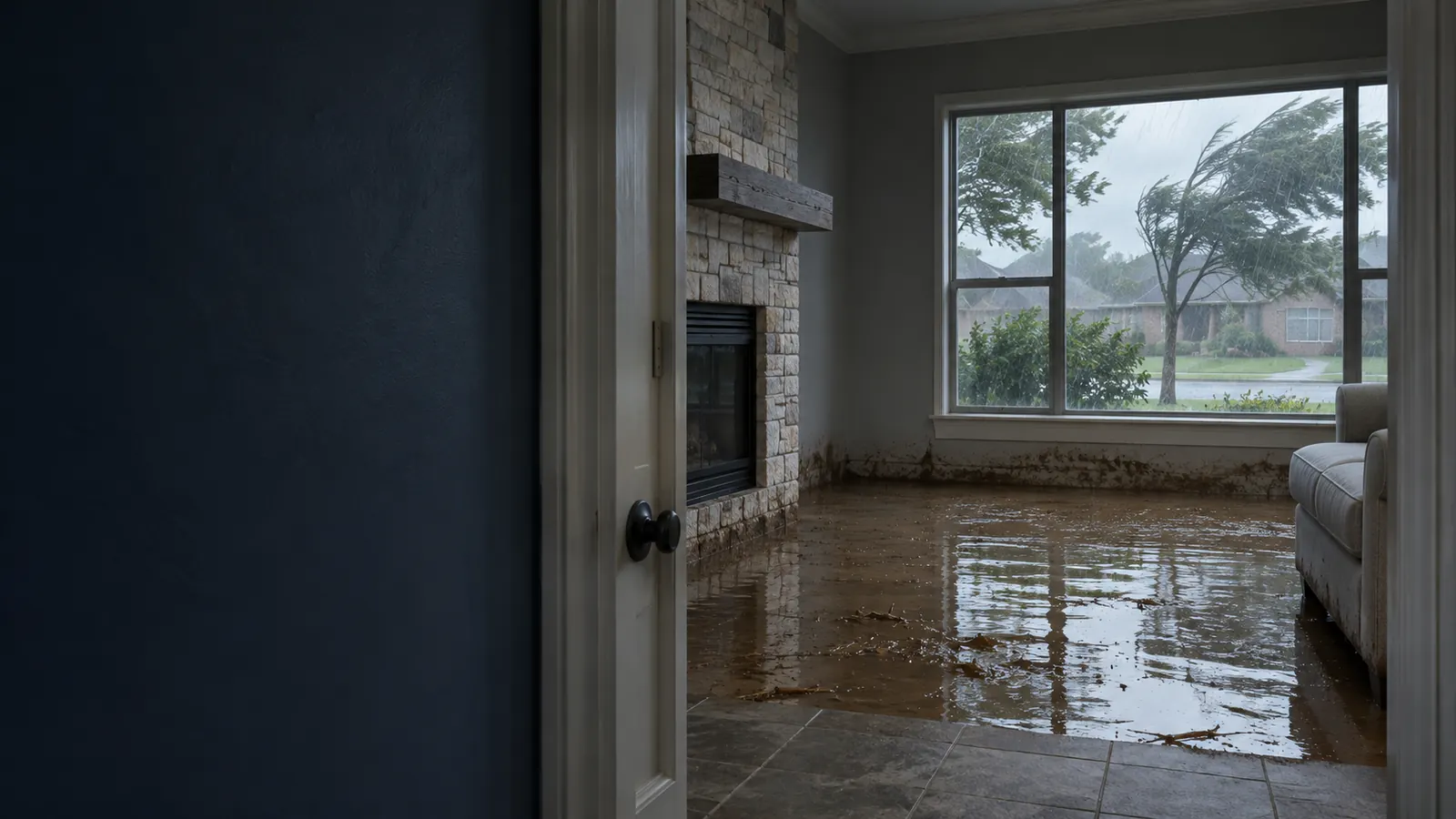
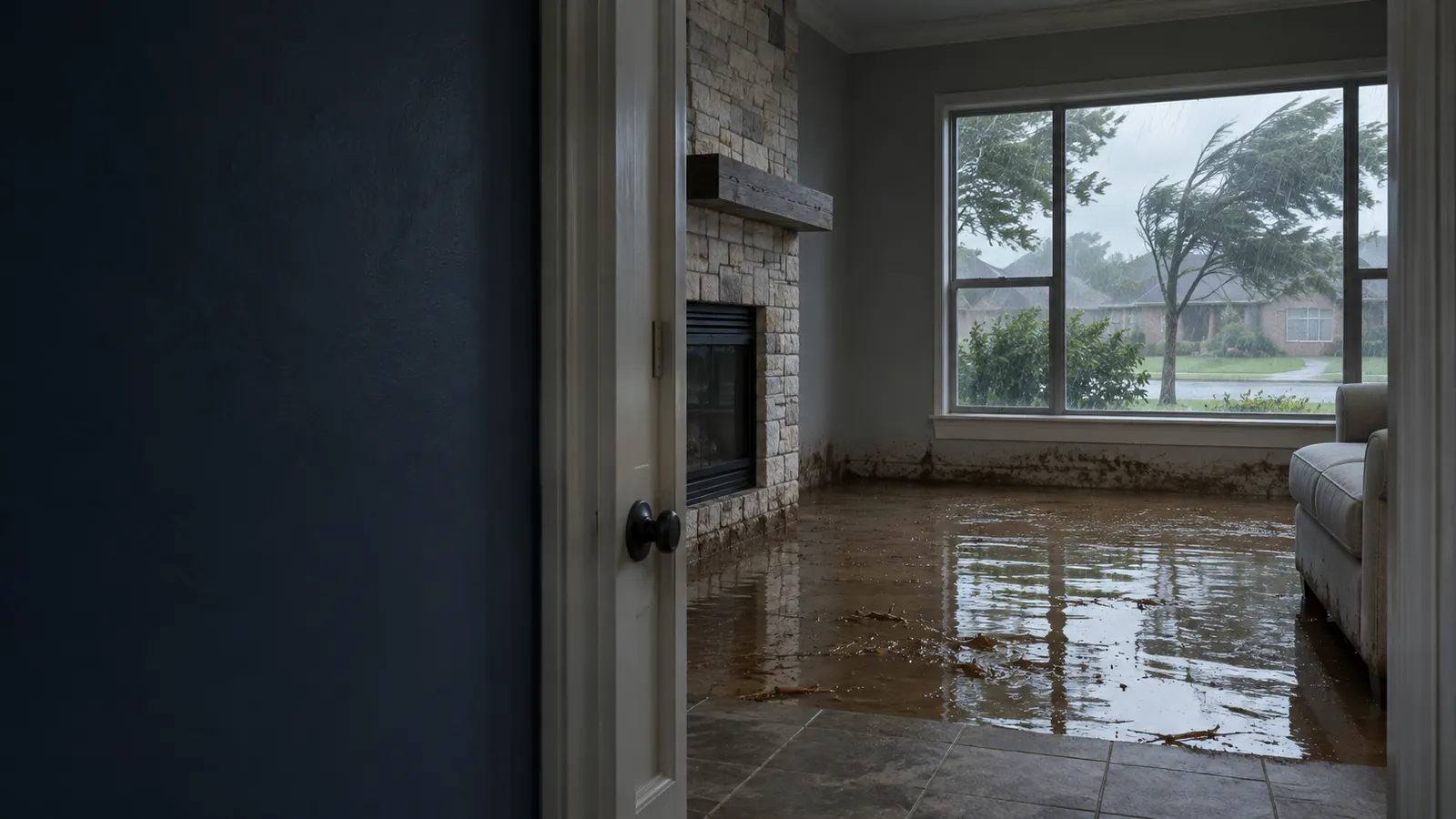
Prioritize people and evacuation instructions over belongings. Stay out of rising water and rooms with electrical or structural hazards. Once conditions permit, document whether water entered through the building exterior or rose from outside, arrange safe source control and ask for an appropriate cleanup assessment.
Do not enter or drive through floodwater
Follow local warnings and evacuation directions. Water can conceal road damage, debris and other hazards, and a familiar street is not proof that a route is passable. Plan a safe destination rather than crossing water to inspect your property.
Inside, avoid standing water near electrical systems and unstable ceilings. Do not climb a wet roof or approach downed lines. Describe conditions from a safe location when contacting emergency responders or utility services. A restoration visit must wait until the property can be accessed safely.
Reference: CDC: Floodwater Safety
Record the entry route without diagnosing it yourself
A roof opening, wind-driven rain at a window and water rising through an exterior doorway are different observations. Photograph water lines, entry points and affected rooms when authorities permit safe access. Note the time and whether water is still entering.
For roof damage, ask an appropriate contractor about temporary exterior protection. For ground-level intrusion, tell the cleanup provider about possible contaminants and affected areas. Weather-related water should not receive a category solely because rain was involved; source and contact conditions need assessment.
Reference: IICRC S500 Consensus Body: Water Categories and Weather Events
Make a safe cleanup plan after re-entry
Do not reconnect wet equipment or operate a potentially affected HVAC system without appropriate evaluation. Ask how the building will be checked, which materials can be cleaned and whether contaminated or damaged porous materials need removal.
Separate belongings only when it can be done safely and in line with the cleanup plan. Keep people away from the work area. CDC’s re-entry guidance and EPA’s flooded-home resources provide useful safety context; the directions from local officials and the professionals assessing your property come first.
Reference: CDC: Reentering Your Flooded Home · EPA: Flooded Homes Cleanup Guidance
Prevent the next ground-level water entry
Once urgent cleanup is arranged, document recurring ground-level entry separately from roof damage. A blocked downspout, a low planting bed and runoff crossing a threshold can call for different exterior corrections. Capture the collection point and the apparent outlet from safe positions; a single photograph of standing water does not establish foundation damage.
For repeated perimeter runoff, TX Foundation Pros describes an exterior drainage assessment. That is a separate service from extracting indoor water and drying wet building materials. Ask what route the proposed work changes, where water will discharge and what remains outside the scope.
The standing-water troubleshooting guide helps organize those observations. If you are also seeing building changes, read about drainage and foundation concerns after heavy rain before assuming one exterior repair explains the whole loss.
Reference: Building America Solution Center: Gutters and Downspouts · Building America Solution Center: Final Grade Slopes Away from Foundation
Ask the right insurance questions
Report the actual cause and keep the evidence that supports it. Homeowners insurance and flood insurance address different risks. A policy may treat rain through a storm-damaged roof differently from rising outside water. Ask your agent or insurer which coverage and deductible apply.
Keep temporary-protection receipts, photographs and inventories. Ask how to document reasonable emergency measures and whether additional inspection is required before permanent repairs. Do not assume that a storm warning or a water category determines coverage on its own.
Reference: Texas Department of Insurance: Home Insurance Guide
Your homeowner checklist
- Follow evacuation and re-entry directions.
- Avoid driving or walking through floodwater.
- Record the entry route and water lines when safe.
- Ask about homeowners and flood coverage separately.
Questions homeowners ask
Is all stormwater automatically Category 3?
No. The IICRC clarifies that top-down rain intrusion is not automatically Category 3. The source, contamination and site conditions require assessment; do not treat unknown water as safe while waiting.
Should I run my HVAC to dry a flooded house?
Ask the appropriate professional first if the system or surrounding area was affected. Reconnecting wet or contaminated equipment can create additional problems.
General homeowner information, informed by the linked public guidance. On-site conditions, local authorities and the appropriate qualified professionals determine what is safe for your property.
More storm & flood damage resources