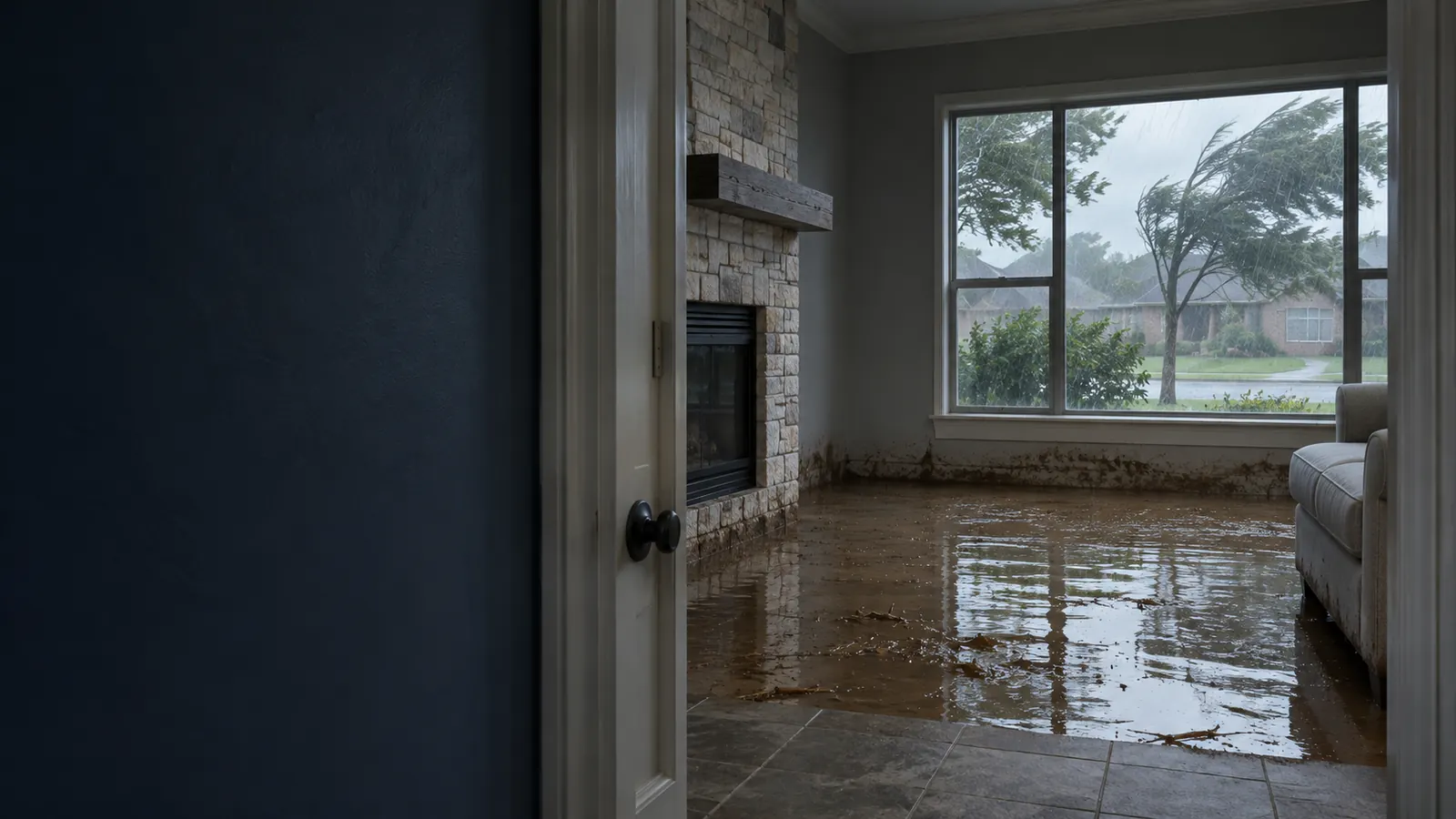
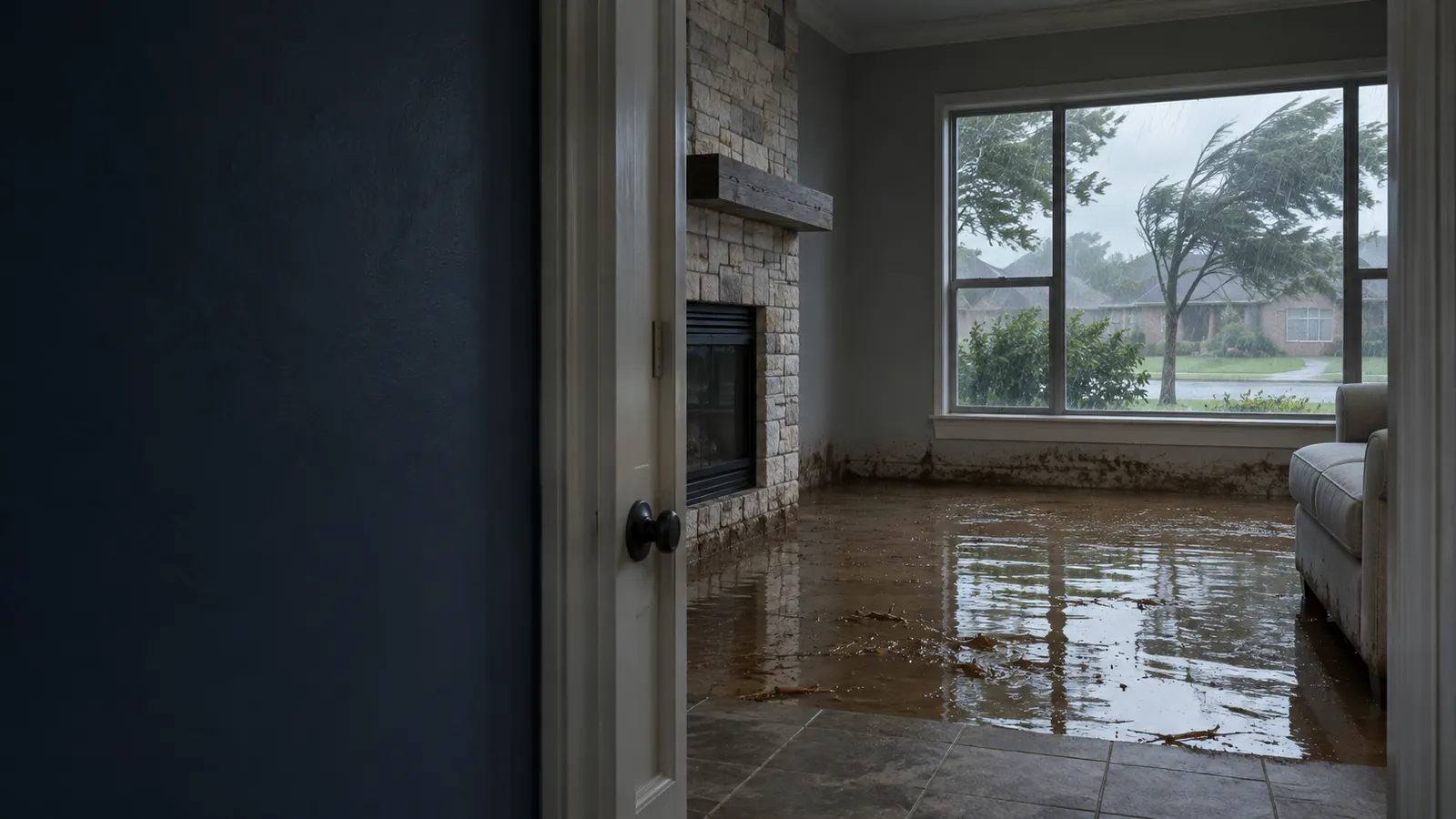
Standing water after rain can come from concentrated roof runoff, a low area, blocked flow or water arriving from higher ground. Start by recording the route and whether water has entered the building. The useful solution depends on where water is collected and where it can go; a French drain is not the default answer to every puddle.
First decide whether this is an exterior observation or an indoor loss
A wet lawn and water crossing a garage or living-room threshold call for different immediate actions. If the building is affected, report the entry point, rooms involved and whether outside water may have carried contaminants. Do not wade into an unfamiliar low area to inspect a drain, and do not use electrical equipment around standing water.
Our flood cleanup service addresses water that has already affected the property. The storm flooding first-steps guide helps separate safe re-entry and interior recovery from the longer-term yard-water investigation. If outside water remains high or authorities restrict access, follow those directions rather than attempting a drainage project during the event.
Reference: CDC: Floodwater Safety
Make a simple rain-event record
When it is safe, photograph the same wide views at the start of runoff, after rainfall ends and when the area has visibly changed. Note whether the water is moving across the surface or remaining in one depression. A timestamped series is more useful than calling the whole yard flooded without a location or sequence.
Include the nearest door, wall edge, pavement and visible water outlet in the frame. Write down whether gutters overflowed, irrigation was running or a downspout extension had disconnected. There is no universal waiting period that makes every puddle harmless or proves a drainage defect. Water entering the house warrants prompt attention regardless of how long the yard stays wet.
Compare roof discharge, grading and blocked flow
Check the route after water leaves the roof, not just the condition of the gutter itself. A working downspout can still discharge into a low bed beside the home. Paving, edging or accumulated debris can interrupt an existing surface route. Ground that directs flow toward a threshold deserves a different review from a roof opening that sends water through a ceiling.
Building America guidance emphasizes moving roof water away from the house and maintaining ground slope that carries runoff away. Treat that as a water-management principle, not a do-it-yourself grading specification. Do not raise soil against siding, bury openings or send discharge toward another property simply to empty the visible low spot.
Reference: Building America Solution Center: Gutters and Downspouts · Building America Solution Center: Final Grade Slopes Away from Foundation
Choose a drainage method after tracing the water
A surface inlet is intended to collect water that reaches its opening. A French drain generally collects water entering an aggregate-filled subsurface trench and perforated piping. Either approach needs a workable discharge route and maintenance access. Drainage design should establish the source, elevations, collection area, utilities and outlet before deciding on the hardware.
If persistent soil wetness suggests a subsurface collection question, TX Foundation Pros describes French drain installation planning. Ask why that approach fits the observed water rather than assuming the term French drain describes every buried pipe. The proposal should also explain what happens at the outlet and which surfaces or plantings will be disturbed.
Reference: Building America Solution Center: Footing Drain Pipe
Ask what the proposal will change and what it will not
Before approving work, request a drawing or explanation that follows water from collection to discharge. Ask how the route behaves when the receiving area is already wet, what can clog, where cleaning access will be and which maintenance belongs to the homeowner. Identify any investigation still needed for a possible plumbing or irrigation leak.
A drainage proposal should not be presented as proof of structural damage. Our separate guide to poor drainage and foundation concerns after rain explains that distinction. If the water route and the building condition both need evaluation, keep their findings and recommendations separate enough to understand what each proposed repair is intended to accomplish.
Close the interior and exterior work as separate tasks
After water entry, a dry-looking yard does not establish that floor assemblies or cabinets are dry. Request the restoration findings before replacing finishes, and tell the exterior contractor which interior entry point was documented. Likewise, a dried room does not show that the outside route has been corrected.
Keep the exterior plan, follow-up observations and interior water-damage restoration records in the same project folder. After later safe rainfall observations, compare the original entry point and discharge area. Report recurrence instead of repeatedly adding temporary barriers that make the water route harder to understand.
Your homeowner checklist
- Identify any indoor entry before focusing only on the yard.
- Photograph the water route from safe, stable positions.
- Record downspout discharge, low areas and interruptions to surface flow.
- Ask how collection, discharge and maintenance work together.
- Keep interior drying and exterior correction completion records separate.
Questions homeowners ask
Is a French drain always better than a surface drain?
No. They collect water differently. The right comparison begins with the source, elevations and discharge route, not a preference for one product name.
Should I fill the puddle with soil?
Do not change grade beside a building without checking clearances and the resulting flow route. Filling one low spot can leave the source unchanged or move water toward a door or another property.
Can the yard problem wait if water entered the house?
The interior water loss needs prompt safety and restoration assessment. Exterior investigation should be coordinated, but it should not delay responding to wet occupied spaces.
General homeowner information, informed by the linked public guidance. On-site conditions, local authorities and the appropriate qualified professionals determine what is safe for your property.
More storm & flood damage resources