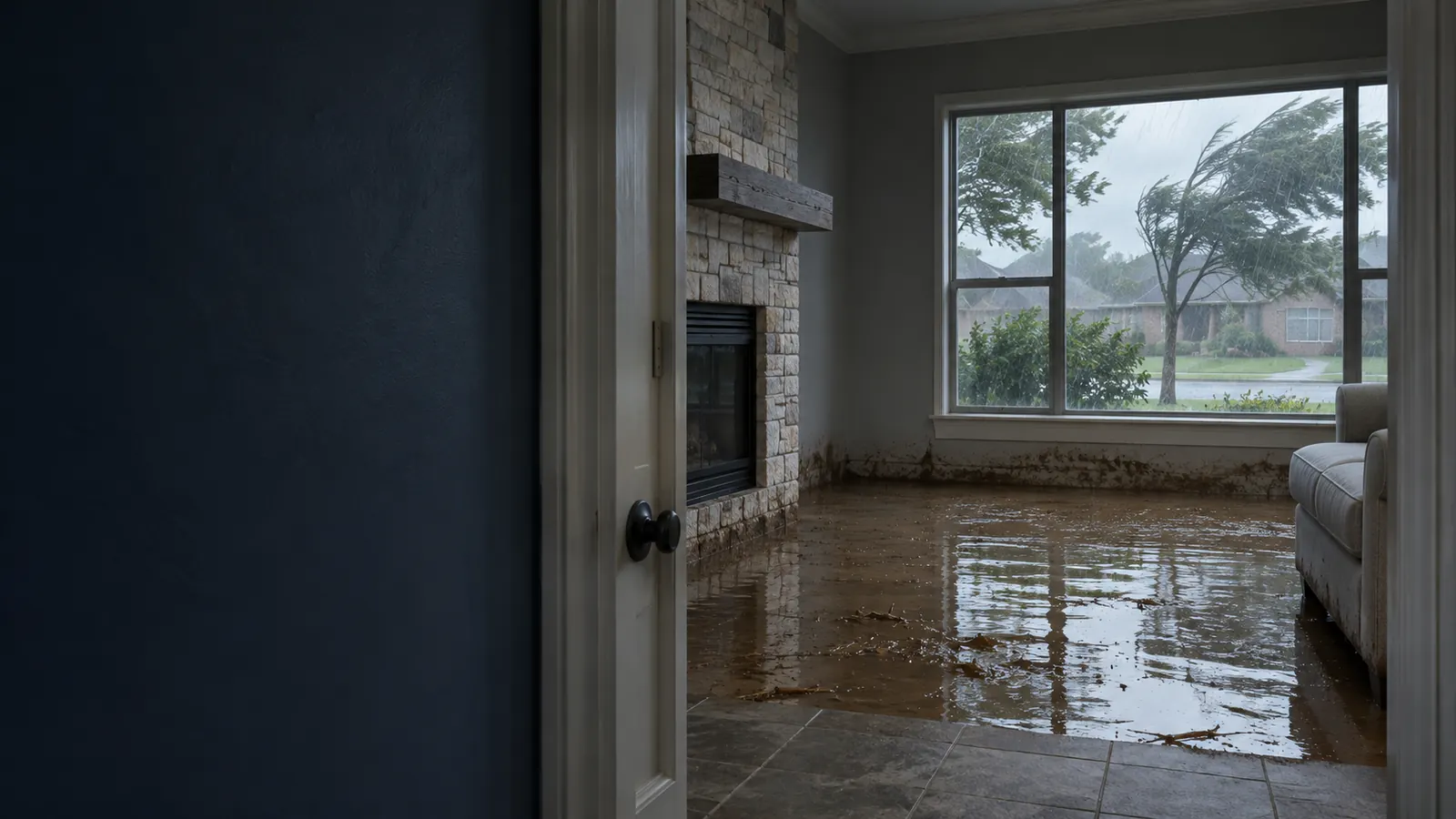
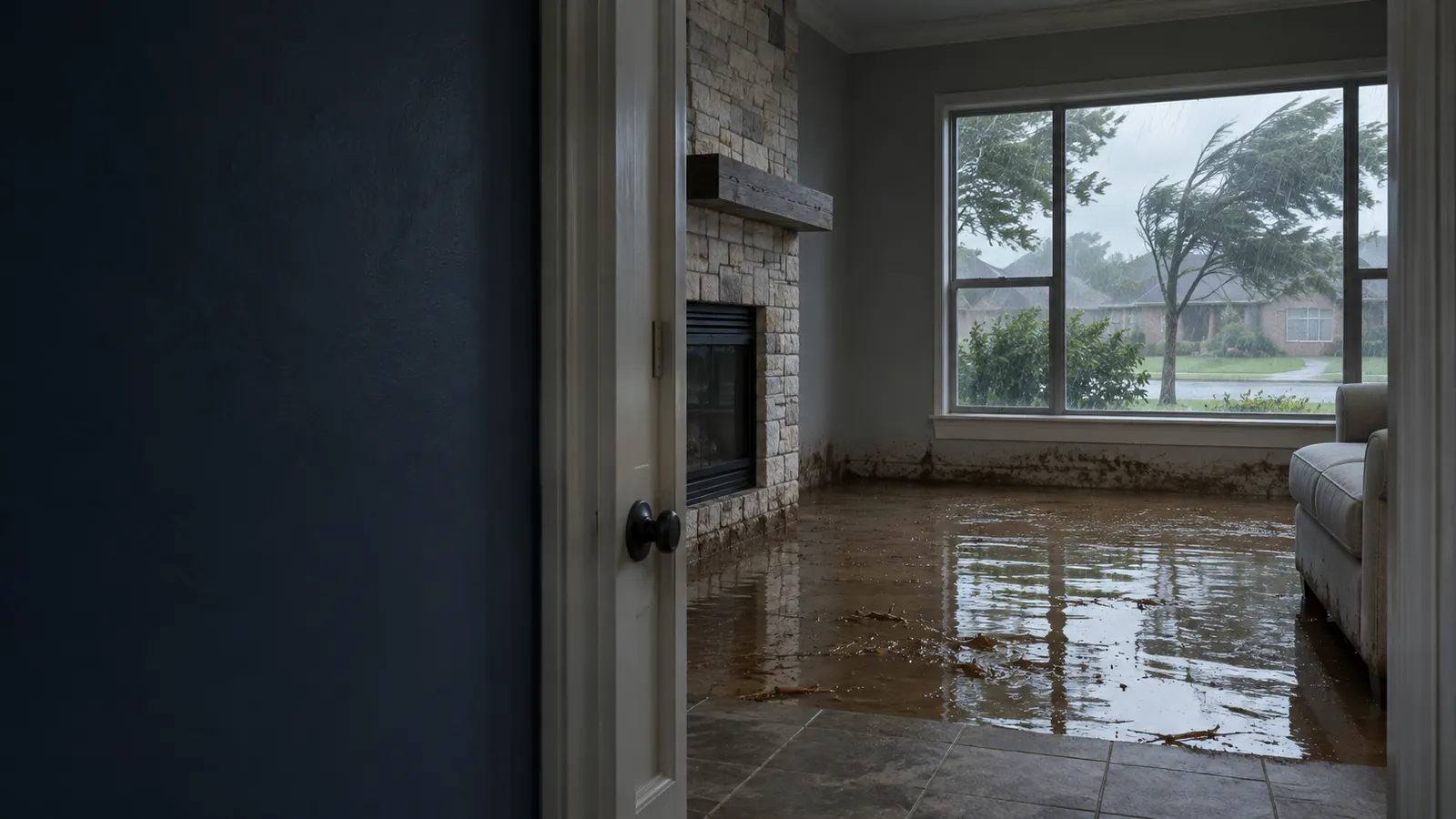
Poor drainage can create persistent wet conditions beside a home and contribute to foundation concerns, but a puddle after rain is not proof of structural damage. If water has entered living space, address safe access, the entry source and wet materials first. Then investigate why exterior water collects and whether any building changes need a separate assessment.
Start with the path water took into the home
An outside drainage problem and an indoor water loss can happen during the same storm without being the same repair. Water crossing a door sill points to a different investigation from a ceiling stain beneath damaged roofing. Record where water first appeared, whether it rose from the yard and which rooms became wet. Avoid deciding that the foundation leaked simply because water reached the floor.
When rooms are affected, our storm damage cleanup guidance explains the restoration side of the response. Water carrying soil or other contaminants needs an appropriate cleanup assessment. Exterior drainage work does not, by itself, remove water beneath flooring, assess wet insulation or establish that an occupied room is ready for finish repairs.
Reference: CDC: Floodwater Safety
Follow roof runoff and the ground beside the wall
A roof delivers rainfall to its edges and downspouts. Overflowing gutters, disconnected extensions and a discharge point beside the house can concentrate that water in one area. The Building America guidance treats roof-water collection and ground slope as related parts of water management. Observations should include where the water goes after it leaves the downspout, not merely whether the gutter looks clean.
From a dry, stable viewpoint, note low planting beds, paving that appears to direct flow toward a doorway and spots where runoff has no obvious exit. A diagram with arrows can be more useful than several close-up photographs of one puddle. Do not climb a roof in wet weather or move soil against siding to create an improvised barrier.
Reference: Building America Solution Center: Gutters and Downspouts · Building America Solution Center: Final Grade Slopes Away from Foundation
Understand soil moisture without diagnosing movement
Certain clay-rich soils change volume as their moisture changes. The Colorado Geological Survey describes this shrink-and-swell behavior as a general soil mechanism; its regional examples do not identify the soil beneath a particular Texas house. A site-specific assessment is needed before connecting a moisture pattern to a foundation condition.
Foundation type, soil, drainage, plumbing history and earlier repairs all matter. A wet corner and a dry side of the building may justify documenting a moisture contrast, but that observation cannot establish a repair method or explain an existing crack. Do not respond by heavily watering one side of the house or abruptly changing a long-standing drainage route without advice appropriate to the property.
Reference: Colorado Geological Survey: Expansive Soil and Rock
Keep an observation record rather than a crack diagnosis
Useful notes describe change: a door that operated normally before the loss, a new floor gap, the date a stain returned or the side yard that stays wet between storms. Include earlier photographs when available. If you cannot tell whether a mark is new, write that uncertainty into the record rather than labeling it storm damage.
A dated sequence helps the next professional compare the building and water conditions. Our guide to cracks appearing after water damage explains which observations belong in that handoff. If you see displaced supports, leaning walls or other obvious signs of instability after flooding, stay out and seek a safety assessment instead of waiting to build a monitoring record.
Reference: EPA: Coming Home After a Flood
When exterior drainage needs its own scope
After urgent interior work is arranged, repeated ponding at the same building edge can warrant an exterior drainage review. Ask for a description of the collection area, the proposed water route, the discharge location and maintenance access. A proposal should explain the observed problem before naming a drain or promising a result.
TX Foundation Pros describes drainage correction options for homeowners considering that separate exterior scope. Ask whether the visit addresses runoff only or also includes foundation observations. If structural analysis or an independent opinion is needed, arrange that explicitly; a drainage proposal is not automatically an engineering assessment.
Reference: Building America Solution Center: Final Grade Slopes Away from Foundation
Coordinate source correction with interior restoration
Keep the drainage findings alongside the water damage restoration scope. Identify who will verify the water entry source, who will document drying and who will approve any work involving the structure. Before closing a room, ask what evidence shows that wet layers have been addressed rather than assuming the next rain will be the only test.
For follow-up, photograph the same exterior locations after later rainfall only when conditions are safe. Record any recurrence indoors and report it promptly to the responsible provider. The goal is a clear, documented handoff between trades, not a guarantee that one drainage change resolves every moisture or building concern.
Your homeowner checklist
- Identify whether water entered through roofing, a wall opening or a ground-level threshold.
- Record roof-water outlets and recurring collection areas from safe locations.
- Keep observations separate from conclusions about structural damage.
- Request written boundaries for drainage, restoration and any foundation evaluation.
Questions homeowners ask
Does one heavy rain mean my foundation needs repair?
No. A storm can expose a drainage weakness without establishing foundation damage. Record what changed and have the relevant professionals assess actual conditions before approving structural work.
Should drainage work happen before water removal?
Do not postpone urgent safety and water-damage assessment while arranging an exterior appointment. The providers should coordinate source control and cleanup; the exact work order depends on safe access and the active source.
Is a drainage system a substitute for drying the house?
No. Exterior correction addresses the water route. Interior restoration assesses the materials and spaces already affected by the loss.
General homeowner information, informed by the linked public guidance. On-site conditions, local authorities and the appropriate qualified professionals determine what is safe for your property.
More storm & flood damage resources