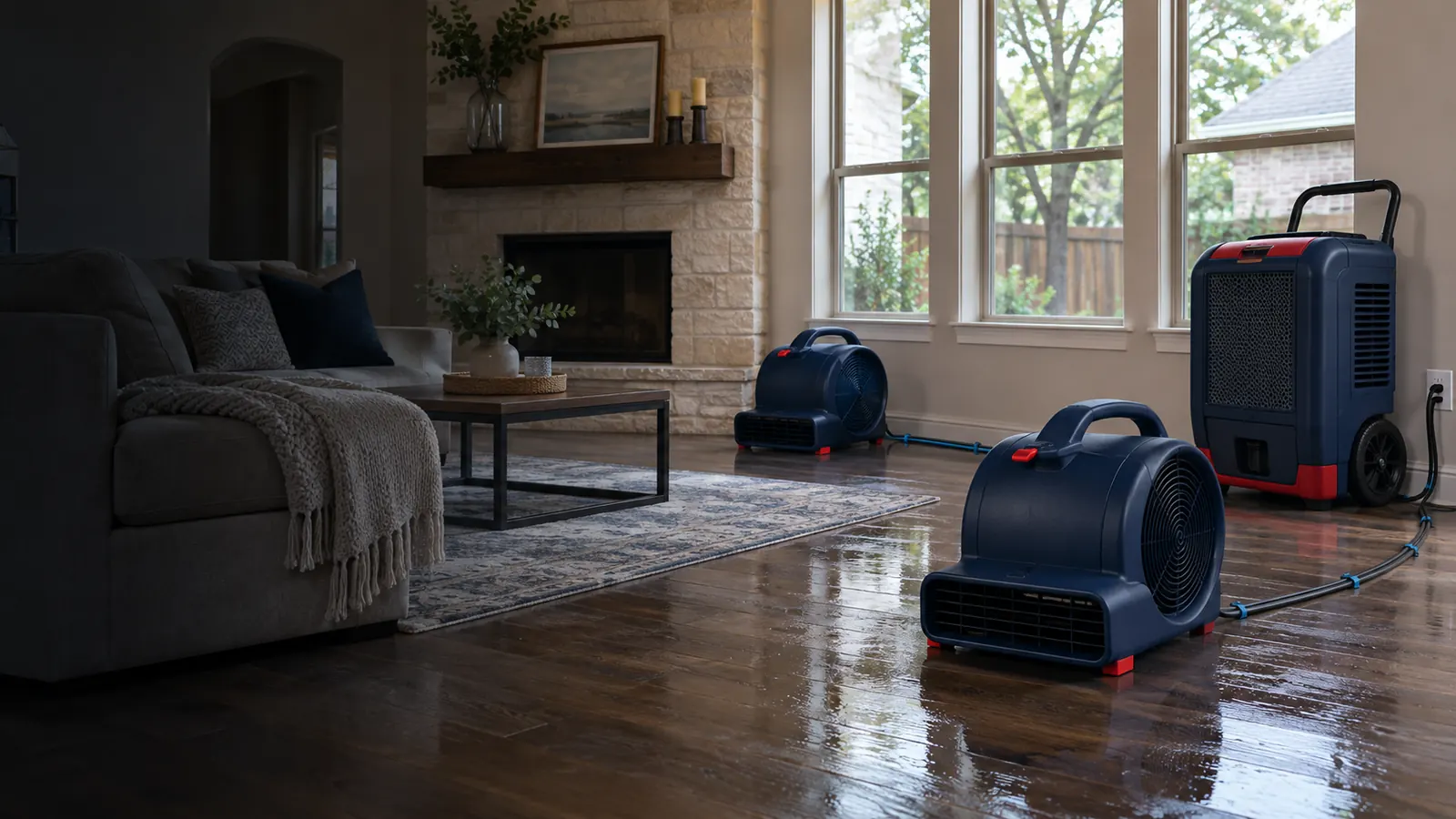
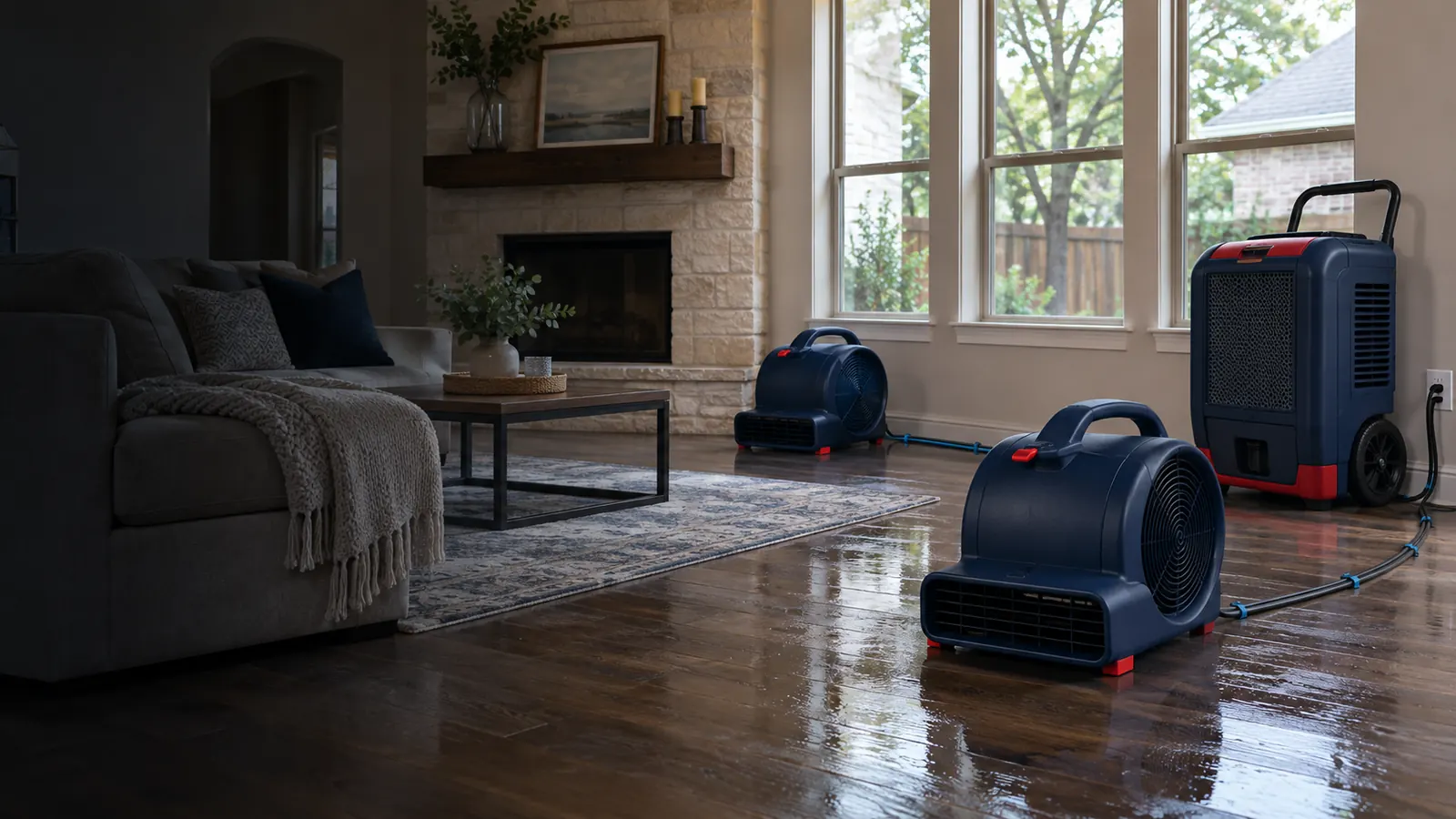
For a wet room in Plano, start by identifying the observed water source and the spaces it reached. Plumbing, appliances, HVAC drainage and rain intrusion call for different repair trades. This guide helps you trace a wet-room problem before replacing a floor or repainting a ceiling. It does not claim that a particular neighborhood has suffered a specific flood or that one cause applies to every home.
Follow a bathroom leak beyond the tile surface
For a Plano bathroom overflow or plumbing leak, describe the adjoining closet, hall and room below, not only the floor where water was first noticed. Tile can make a surface look easy to clean while nearby trim, joints or other layers need assessment.
Stop using the suspected fixture and arrange a plumbing diagnosis. Ask whether the water source may involve contamination before moving belongings or trying household equipment. A toilet overflow is not fully described by saying that the water looked clear.
Do not mistake an HVAC clue for a roof diagnosis
A stain near an air register can prompt questions about condensate drainage, nearby plumbing and the roof. Record whether the change followed air-conditioning use, a shower or rainfall. An appropriate technician should establish the cause rather than treating the stain location as conclusive.
If the ceiling is swollen, dripping through a fixture or shedding material, keep people out from underneath. Do not inspect a wet attic or use a ladder beneath an unstable patch. Share the observations from a safe room entrance.
Reference: CDC: Reentering Your Flooded Home
Ask what happened beneath cabinets and flooring
A small appliance leak can enter toe-kick gaps or spread beneath a finish before a large puddle appears. Tell the assessor about soft cabinet material, lifted seams, repeated dampness or an odor. These observations justify questions; they do not prove a particular material must be discarded.
Request a clear explanation of what can be assessed without opening the assembly and when access or removal may be necessary. Replacing a visible plank or cabinet panel before the water path is understood can leave an unanswered moisture question.
Give your Plano repair visit a useful handoff
For a home in East Plano, West Plano or the Legacy corridor, provide the actual street address, access instructions and building layout. Neighborhood names help locate the property but do not establish a shared construction problem.
Before finish repairs, ask for the source-repair findings and moisture completion record. Keep one folder for photographs, scopes, changes and receipts. If a recommendation changes after an area is opened, ask which new finding changed the plan and get the revised scope in writing.
Reference: IICRC: Standard for Professional Water Damage Restoration
Your homeowner checklist
- Record the source, timing and connected rooms.
- Ask the appropriate repair trade for a diagnosis.
- Keep away from wet electrical areas and unstable ceilings.
- Request a moisture completion record before finish repairs.
Questions homeowners ask
Is one water damage cause typical of every Plano home?
No. Construction, maintenance history, plumbing layout and current conditions vary. A local label should not replace property-specific assessment.
Can a small leak affect another room?
Yes, water can travel through connected assemblies. Tell the assessor about adjacent rooms and any new stains or flooring changes.
General homeowner information, informed by the linked public guidance. On-site conditions, local authorities and the appropriate qualified professionals determine what is safe for your property.
More water damage resources