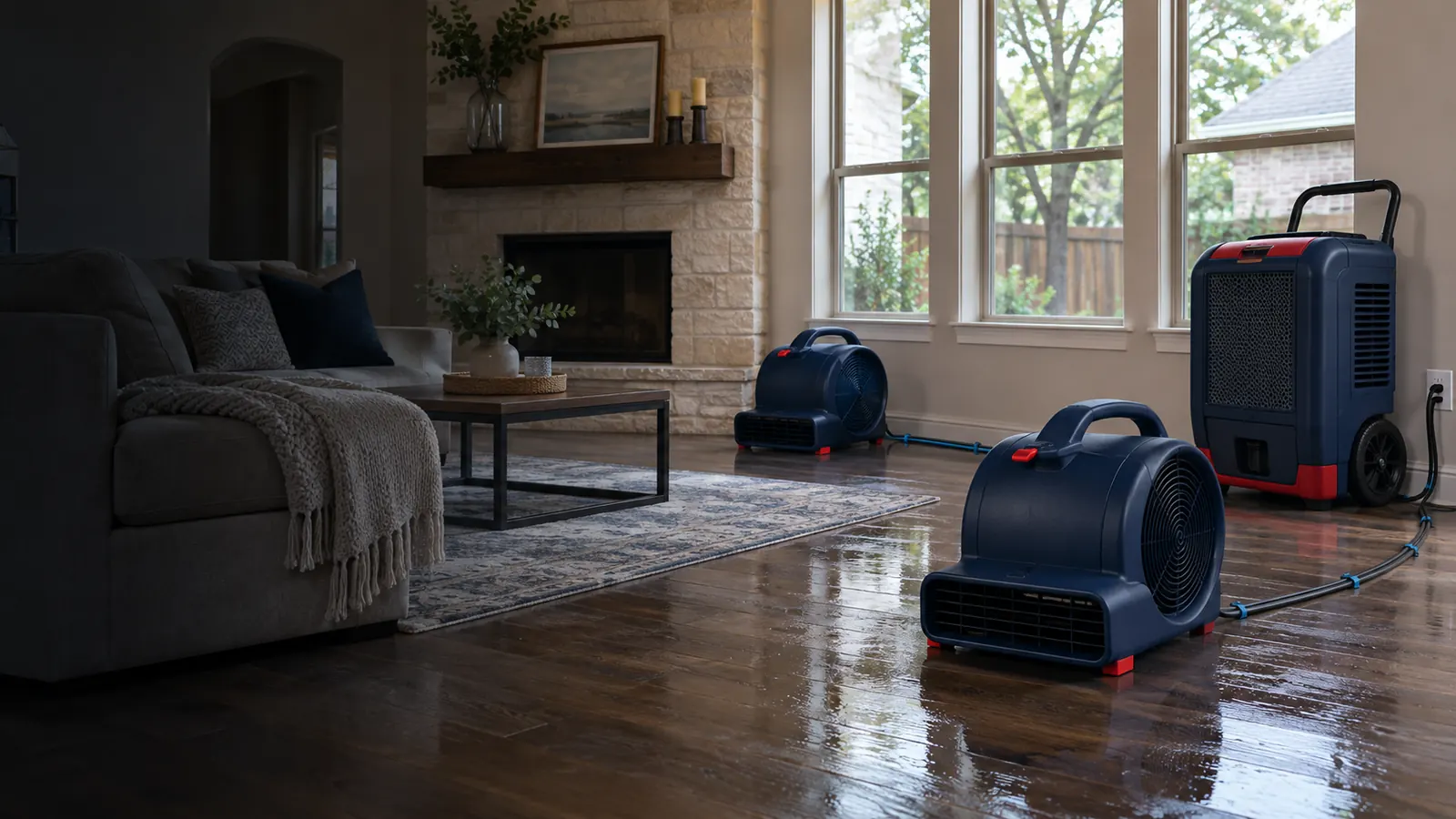
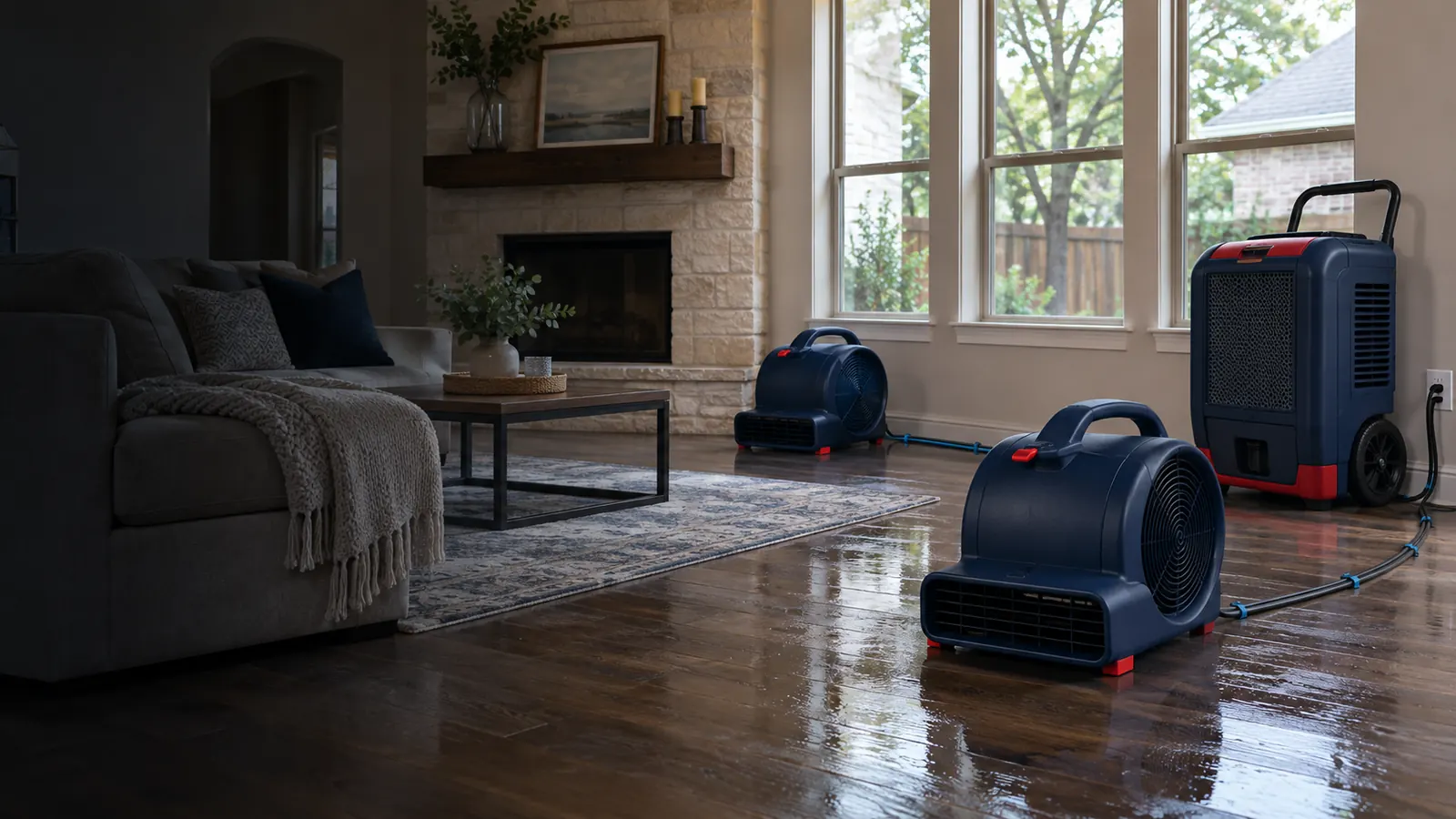
A leak beneath a concrete slab can affect surrounding moisture conditions and damage interior materials. That does not mean every concealed leak has damaged the foundation. Start with a plumbing diagnosis and control of the water source, arrange restoration for affected rooms, and request a separate foundation evaluation when the building evidence calls for one.
What homeowners mean by a slab leak
The term usually describes leaking plumbing below or within a concrete slab. It does not identify the failed line, its location or the best way to access it. Water supply and drain piping involve different operating conditions, so tell the plumber what has been observed rather than requesting a specific test based only on an internet description.
A damp floor is not enough to locate a concealed leak. Roof entry, an appliance, a wall pipe or moisture moving through another assembly may produce a similar visible mark. Keep the investigation open until the source is established. Do not drill through flooring or open the slab to look for water before the appropriate professionals have planned the work.
Bring plumbing clues to a plumber, not a repair conclusion
EPA WaterSense recommends checking unexplained water use and using meter observations to help identify possible leakage. A meter check can raise a useful question about a supply-side loss, but it does not tell you where a leak is. It also cannot clear every possible drain-line problem. Plumbing testing and interpretation belong with an appropriately qualified plumbing professional.
Write down unexplained bill changes, new dampness, fixture-use timing and any sound of running water when normal uses are off. Note irrigation and appliances that might be operating. If shutoff access is unsafe, describe that when requesting assistance. Do not keep fixtures running to make a stain larger for a photograph.
Protect rooms while the concealed source is investigated
An active interior loss still needs emergency water extraction and assessment where appropriate. Tell the restoration provider which floors, cabinets and adjoining rooms are affected, whether the source remains active and whether anyone has identified contamination. A plumbing visit should not be mistaken for a complete assessment of the wet building.
If a line has visibly burst or water can be stopped safely, the burst-pipe cleanup checklist covers immediate source-control questions. Avoid standing water near electrical equipment. Arrange safe access before retrieving belongings or moving appliances, and keep children and pets away from the affected area.
Reference: CDC: Reentering Your Flooded Home
Why supporting soil belongs in a separate conversation
Water reaching soil beneath or beside a slab can change its moisture state. Some soils are sensitive to changes in water content, but the response depends on soil properties and site conditions. A leak record alone cannot establish that a slab moved, when movement occurred or whether underpinning is appropriate.
Give an evaluator the plumbing findings, the approximate discovery timeline and earlier repair records. Ask which observations support any proposed connection between the leak and the building condition. A floor-elevation difference or crack needs interpretation in context; neither proves that the recent water event caused it. Claims about cause should identify their evidence and their limits.
Reference: Colorado Geological Survey: Expansive Soil and Rock
Separate leak repair from a slab evaluation
The plumber establishes the plumbing problem and repair options. The restoration team addresses affected materials. A foundation evaluator considers the slab and building evidence within an agreed scope. When structural safety, engineering design or an independent assessment is needed, ask for the appropriate professional service explicitly.
For the foundation portion of that discussion, TX Foundation Pros outlines slab foundation repair considerations. Use the information to prepare questions about measurements, repair boundaries and plumbing coordination, not to select a repair before the leak and building have been evaluated. Confirm which testing and reports are included in each proposal.
Keep three completion records before covering the work
Ask the plumber what demonstrates that the identified plumbing fault was repaired and what limits remain in the testing. Ask the restoration provider for its moisture assessment and completion findings. If foundation work is recommended, request the property-specific basis and the proposed scope separately. One invoice should not be assumed to answer all three questions.
Save the records with discovery photographs, affected-room notes and any approved changes. The water damage insurance documentation guide provides a folder structure for that handoff without promising coverage. If dampness returns after repair, report the timing and location; do not dismiss it as an old stain before the source is reviewed.
Your homeowner checklist
- Record water-use changes and visible wet areas without locating a leak yourself.
- Arrange the appropriate plumbing diagnosis and safe source control.
- Request a separate assessment of wet interior materials.
- Compare plumbing, drying and any foundation findings before closing access or replacing finishes.
Questions homeowners ask
Does a moving water meter prove a slab leak?
No. It may indicate water use or a supply-side leak somewhere in the system. A plumber should interpret the observations and locate the source; the meter does not identify a below-slab location.
Can I dry the room while waiting for a foundation appointment?
Arrange restoration and source control promptly when safe. A foundation appointment does not replace those urgent steps. Providers should coordinate if access, structural conditions or active leakage affects the work.
Will foundation repair fix the pipe?
Do not assume so. Plumbing repair, restoration and foundation work are separate scopes unless a written agreement specifically includes and coordinates the relevant services.
General homeowner information, informed by the linked public guidance. On-site conditions, local authorities and the appropriate qualified professionals determine what is safe for your property.
More water damage resources