
Coverage depends on your policy and the cause of the water damage. Texas insurance guidance distinguishes sudden, accidental water losses from gradual leaks and outside flooding. Report the actual event, read your policy and ask the insurer which coverage, exclusions, limits and deductible apply before assuming reimbursement.
Describe the cause precisely
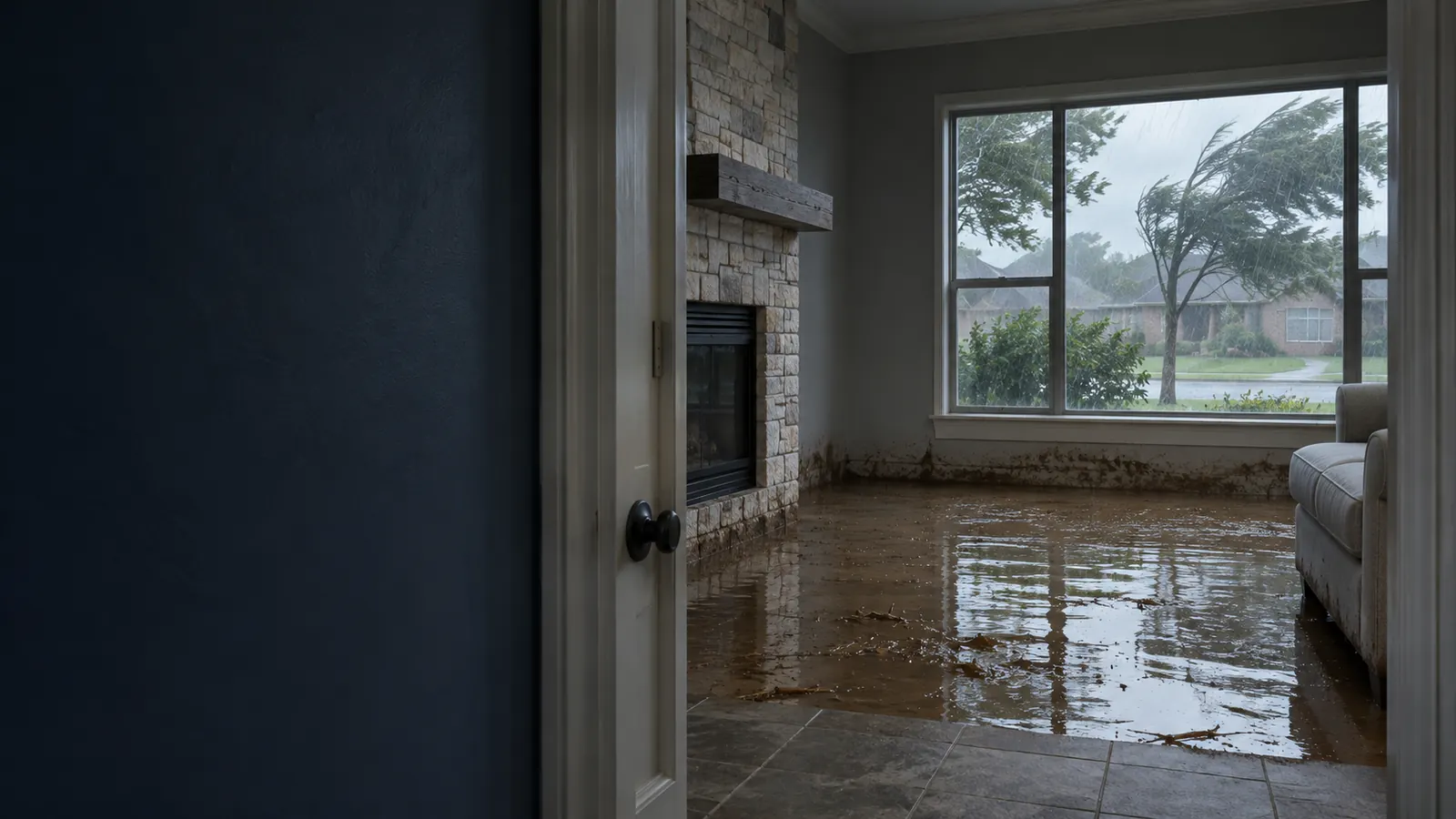
Write down whether the water came from a broken supply line, an overflowing appliance, a drain backup, rain through an opening or rising outside water. These descriptions give the insurer more useful information than calling every event a flood.
TDI notes that many homeowners policies cover sudden accidental water damage but generally treat ongoing leaks and flooding differently. That general guidance does not decide an individual claim. The policy language, endorsements and findings about the event still matter.
Reference: Texas Department of Insurance: Water Damage and Mold Coverage
Ask about flooding and drain backup separately
A standard home policy and a flood policy do not insure exactly the same risks. Ask your insurer about the definition of flood and whether separate flood coverage applies. Sewer or drain-backup protection may also depend on a particular endorsement.
If rain entered through a storm-damaged roof, record the exterior damage and entry route when it is safe to do so. Do not assume that the date of a storm resolves coverage. Ask what evidence the insurer needs to distinguish one possible cause from another.
Reference: Texas Department of Insurance: Home Insurance Guide
Document reasonable emergency steps
Keep photographs, discovery and shutoff times, the repair diagnosis and receipts. Ask your insurer how to document temporary protection or other measures to prevent additional damage. Do not delay an urgent safety response just to obtain a perfect picture.
Before discarding damaged items, ask what inventory, photographs or inspection records are needed. Organize restoration records separately from the original source repair so the work can be understood. Avoid sending private account or policy details through a general callback form.
Get explanations for gaps or disagreements
Ask for the specific reason when a claim item is limited or denied and where that reason appears in the policy. Request clarification when the contractor’s proposed scope differs from the insurer’s estimate. Keep copies of the written responses and a dated communication log.
A restoration contractor can explain findings and recommended work but cannot promise coverage or act as a substitute for your insurer, licensed adviser or legal representative. Use TDI consumer resources if you need help understanding the available complaint or dispute process.
Reference: Texas Department of Insurance: Home Insurance Guide
Your homeowner checklist
- Record the actual source rather than using a generic label.
- Ask about flood and backup coverage separately.
- Keep source-repair, mitigation and reconstruction records.
- Request written explanations for coverage limitations.
Questions homeowners ask
Are gradual leaks covered?
Many policies exclude damage from ongoing leaks or seepage, but the actual policy and facts govern. Ask your insurer about your specific situation.
Does mold automatically have the same coverage as the original leak?
No assumption is safe. TDI notes distinctions involving damaged materials, cleanup and testing. Ask about mold provisions, limits and endorsements in your own policy.
General homeowner information, informed by the linked public guidance. On-site conditions, local authorities and the appropriate qualified professionals determine what is safe for your property.
More insurance & claims resources